

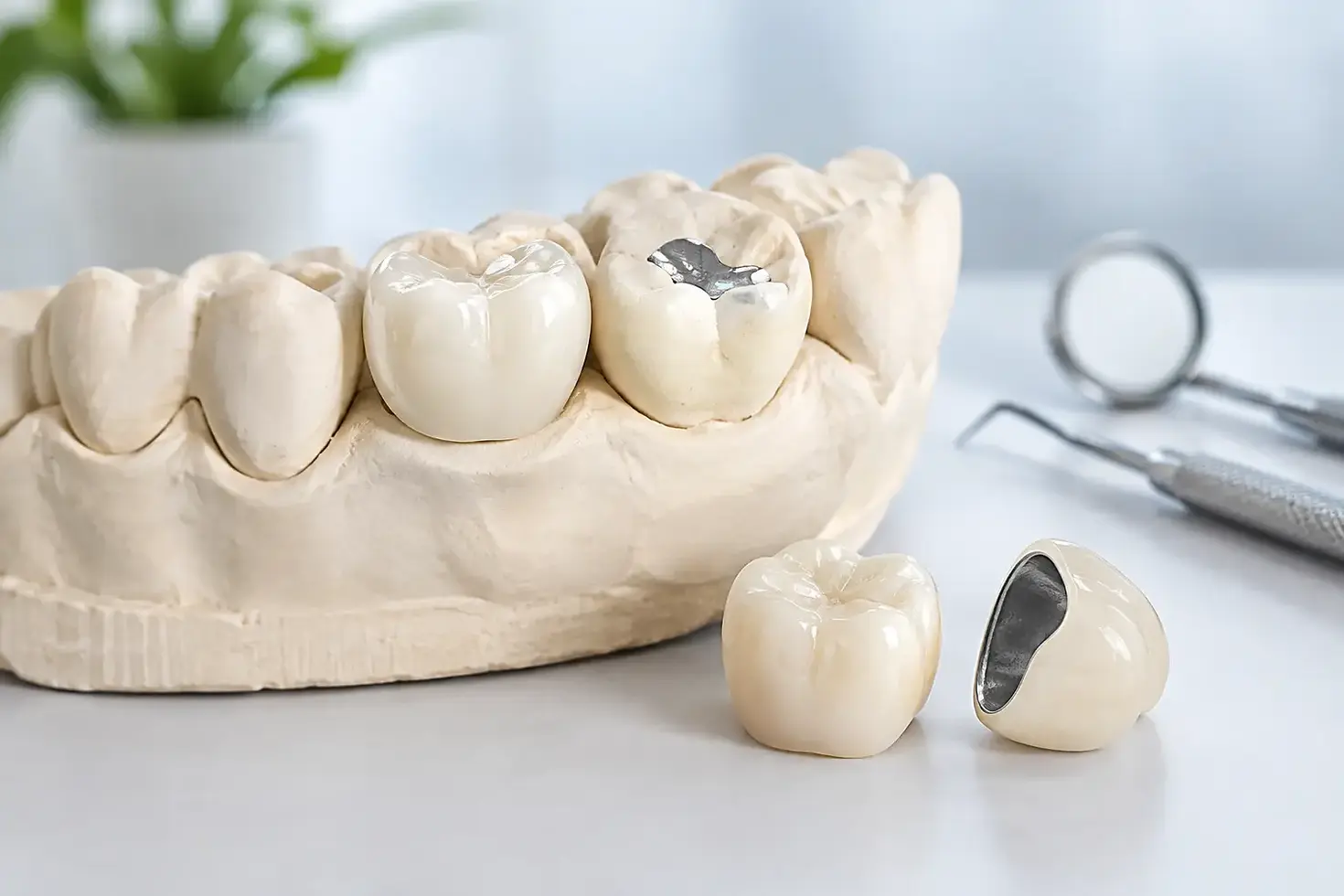
Dental Crown Versus Filling: Which Fits Your Tooth?

A chipped tooth does not always need a crown. A cavity does not always need a filling. The right answer in a dental crown versus filling decision comes down to how much healthy tooth remains, where the damage is located, and how much force that tooth handles every day.
That can feel frustrating when you want a simple answer and you are already dealing with sensitivity, a broken edge, or a surprise toothache. A clear exam and X-rays help your dentist recommend the most conservative option that will still protect your tooth for the long term. The goal is not to make treatment more complicated. It is to stop a small problem from becoming a painful, expensive emergency.
Dental Crown Versus Filling: The Core Difference
A filling repairs a smaller area of damage. Your dentist removes decay or cleans up a minor fracture, then replaces the missing portion with a tooth-colored composite material. The filling bonds to the tooth and restores its shape so you can bite and chew normally.
A dental crown is a custom cover that fits over the visible part of a tooth. It is used when the tooth is too weak, too broken down, or too heavily restored for a filling to provide dependable support. Think of a crown as protective armor for a tooth that is still worth saving but needs reinforcement around all sides.
Both treatments preserve your natural tooth, and both can be excellent choices. A crown is not automatically “better” than a filling. It is simply designed for a different level of damage.
When a Filling Is Usually the Better Choice
A filling is often the most conservative treatment for a small to moderate cavity, a minor chip, or worn enamel. It generally requires removing less healthy tooth structure than a crown and can often be completed in one appointment.
Fillings work best when enough strong tooth enamel remains around the damaged area. For example, a cavity on the side of a tooth or in a chewing groove may be repaired successfully with composite resin if the tooth has not become cracked or hollowed out.
A filling may also be the practical choice when an older filling has a small defect but the surrounding tooth is solid. Replacing the filling early can prevent decay from spreading underneath it.
Still, fillings have limits. Large fillings can leave thin walls of tooth vulnerable to cracking, especially on molars that absorb heavy chewing pressure. If a filling takes up much of the biting surface, the tooth may need more support than composite material alone can provide.
When a Crown May Protect Your Tooth Better
A crown is commonly recommended when a tooth has a large cavity, a significant fracture, or a very large old filling. It may also be needed after root canal treatment, since a tooth that has lost substantial structure can be more likely to break under normal biting forces.
Your dentist may recommend a crown if you have pain when biting, visible cracks, or a cusp that has broken off. A cusp is one of the pointed sections on the chewing surface of a back tooth. When one fractures, simply filling the missing corner may not prevent the rest of the tooth from splitting later.
Crowns can also restore teeth that are severely worn, misshapen, or discolored when other options will not provide enough strength or coverage. The important question is whether the remaining tooth can safely hold a filling. If the answer is no, placing a crown can help avoid a deeper fracture, infection, or extraction.
The Decision Is About Tooth Strength, Not Just Cavity Size
Two cavities that look similar on an X-ray may call for different treatment. One tooth may have thick, healthy walls and need only a filling. Another may already have a large old restoration, a crack, or weakened enamel. That second tooth can be at greater risk even if the new cavity is not especially large.
Location matters, too. Front teeth generally experience different forces than back teeth. A small chip on a front tooth may be treated with bonding, while a fractured molar may need a crown because it carries the force of chewing.
Your bite can affect the recommendation. Teeth grinding, clenching, and chewing on ice or hard candy place added stress on restorations. If you grind your teeth at night, a crown may be a more protective option for a heavily damaged tooth, and a night guard may help protect your dental work afterward.
What the Treatment Process Feels Like
For a filling, the area is numbed, decay is removed, and the tooth-colored material is placed in layers and hardened. The dentist shapes and polishes it, then checks your bite. Mild sensitivity to cold or pressure can happen for a short time, particularly if the filling was deep.
For a traditional crown, the tooth is numbed and shaped so the crown can fit over it. Your dentist takes a digital or physical impression to guide the custom restoration. A temporary crown may protect the tooth while the final crown is made, followed by a return visit to bond the final crown in place.
Some offices can provide certain crowns more quickly, but the timing depends on the tooth, the material, and the complexity of your treatment. If you are short on time or worried about multiple visits, ask what your appointment plan will look like before treatment begins. Clear expectations can make the process much less stressful.
Cost, Insurance, and the Value of Treating Problems Early
A filling usually costs less than a crown because it uses less material and involves less laboratory work. Insurance plans often cover both restorative treatments at different percentages, depending on your plan, deductible, waiting periods, and annual maximum.
The lowest initial cost is not always the best value. A filling placed on a tooth that is already structurally weak may fail or allow the tooth to crack. On the other hand, choosing a crown when a conservative filling would last well means treating more tooth than necessary. A good recommendation balances today’s cost with the likelihood of future repairs.
Do not let uncertainty about insurance stop you from getting an exam. Ask for a clear explanation of your benefits, estimated out-of-pocket cost, and available payment options. Sanford Modern Dentistry helps patients understand their options without making the financial conversation feel like a maze.
Do Not Wait if You Have These Warning Signs
A lost filling or chipped tooth may seem manageable until pain starts. Prompt care can often preserve more of the tooth and keep treatment simpler. Call for a dental appointment as soon as possible if you have severe or lingering tooth pain, swelling in the gums or face, pain when biting, a loose restoration, a broken tooth with a sharp edge, or sensitivity that is getting worse.
Facial swelling, fever, trouble swallowing, or difficulty breathing can signal a serious infection and need urgent medical attention. If a tooth breaks after a fall or accident, save any pieces you can find, rinse your mouth gently, and seek care quickly.
How to Make the Choice With Confidence
At your visit, ask your dentist to show you the X-ray or intraoral photo and explain what they see. It is reasonable to ask how much healthy tooth remains, whether there is evidence of a crack, what could happen if you choose the less extensive option, and how long each restoration may reasonably last.
The best treatment is the one that protects your natural tooth without adding unnecessary work. Whether that means a straightforward filling or the added coverage of a crown, getting answers early gives you more choices and more control over your care. If a tooth is hurting, cracked, or suddenly sensitive, scheduling an exam now may be the step that keeps a manageable repair from turning into an urgent problem.
The comparison between dental crowns and fillings is useful because both treatments serve different purposes depending on the extent of tooth damage. I appreciate the straightforward explanation of protecting and restoring natural teeth. Resources such as calgary dentist can further support patients researching their options. Understanding the differences helps make conversations about appropriate dental treatment more informative.
I like this Blog